
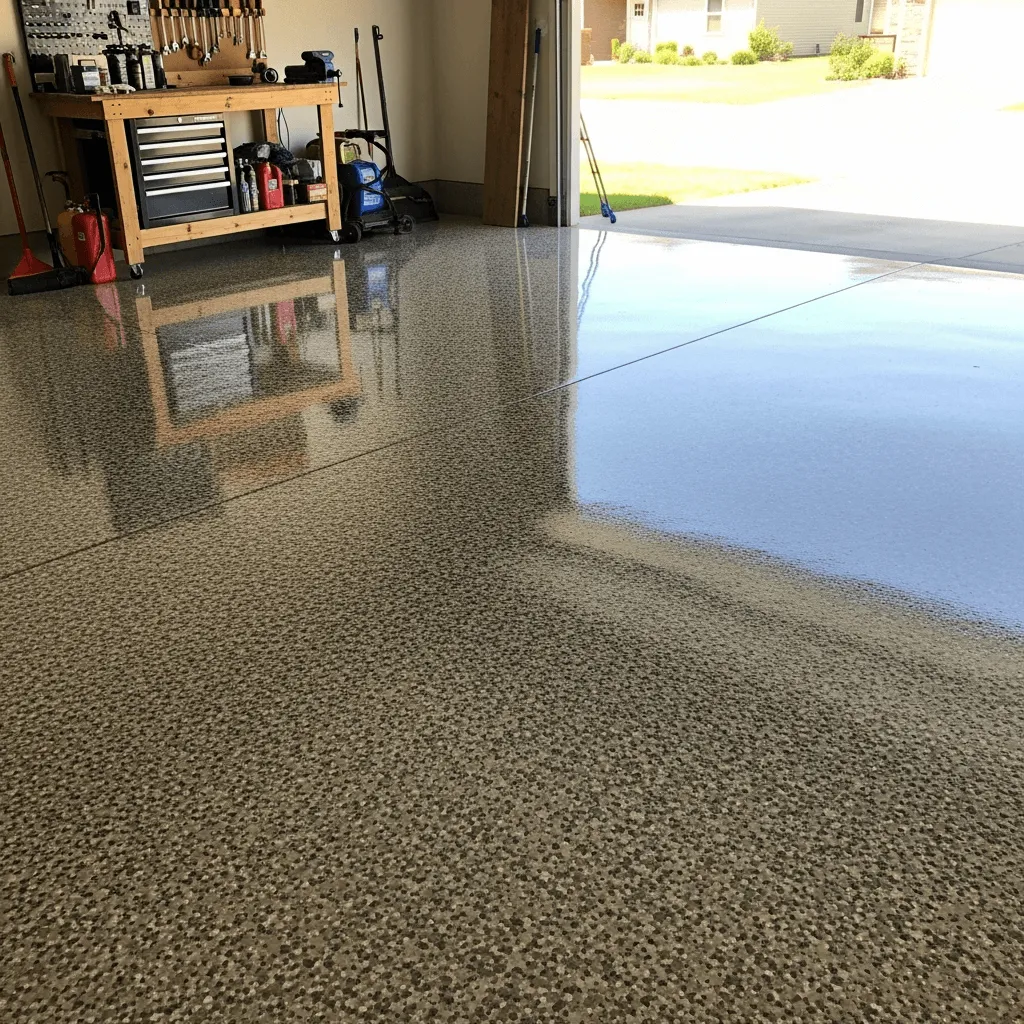
An Ontario garage floor spends half the year under salty meltwater. Every car that comes in drips brine onto the slab, the water soaks in, freezes and thaws, and the salt crystallizes inside the surface. Over a few winters that is how pitting, scaling and spalling start.
Why Bare Concrete Breaks Down
Concrete is porous. Salt water gets into the pores and, as it freezes and the salt crystallizes, it breaks the surface apart. Oil and fluids soak into the same pores and leave permanent stains.
How a Coating Helps
A properly installed coating seals the surface so brine and oil sit on top where they can be squeegeed or rinsed away. Flake floors add texture and hide salt residue between cleanings.
Why DIY Kits Often Peel
Most DIY kits are thin and are applied over etched or simply washed concrete. Hot tires soften the coating, and as the car pulls away the coating lifts. That is called hot-tire pickup. A diamond-ground slab and a professional-grade system are designed to resist it.
The System We Recommend
For most Ontario garages: diamond grinding, crack and spall repair, an epoxy base coat, full-broadcast flake, and a UV-stable clear topcoat such as polyaspartic. Add a fine slip-resistant texture if you bring a lot of snow in on the car.
Caring for a Coated Garage Floor in Winter
- Squeegee meltwater out of the garage regularly
- Rinse salt residue off now and then through the winter
- Use mats under the car if you like, but avoid rubber mats that trap salt water for weeks
- Clean with a pH-neutral cleaner, not harsh solvents
When to Install
Coatings need the slab and air within the product's temperature range. Heated garages can be done year-round; unheated ones are best done from spring to fall, or with temporary heat.