
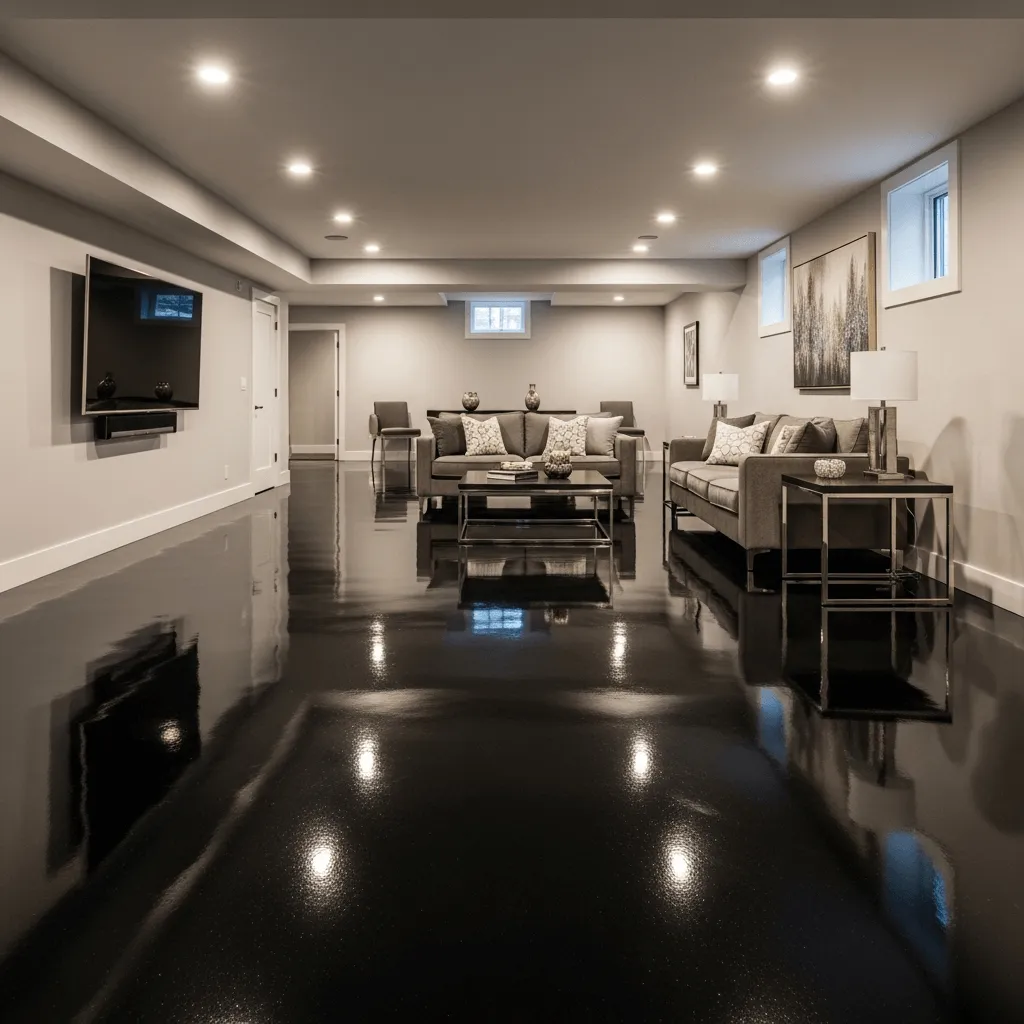
An epoxy basement floor is bright, seamless and easy to clean, with no carpet to trap moisture and odours. But basements bring one challenge most other rooms do not: moisture coming up through the slab.
Why Moisture Matters
Basement slabs sit on the ground, and many older Ontario homes have no vapour barrier under the concrete. Moisture vapour moves up through the slab, and if a coating is applied over it, pressure can build underneath and cause blistering or lifting.
How It Is Tested
A contractor should check the slab before quoting a system. Methods range from simple plastic-sheet tests to in-slab relative humidity probes and calcium chloride tests. The readings tell us whether a standard primer is fine or a moisture-mitigating primer is needed.
What If the Readings Are High?
Elevated moisture vapour can often be handled with a moisture-mitigating primer. Active leaks, cracks that let water in, or a basement that floods are a different problem: a coating is not waterproofing, and those need to be fixed first.
Choosing a Finish
- Solid colour: clean and modern, great for gyms, laundry and storage
- Flake: textured and forgiving, hides dust and small imperfections
- Metallic: a statement floor for bars, theatres and living spaces
- Stained or sealed concrete: a natural, architectural look
What Installation Looks Like
Old paint, carpet glue or tile adhesive is removed, the slab is diamond-ground and cracks are repaired, then the primer, base and topcoat go down. Most basements take a few days. Ask about low-odour products if the home is occupied.